
Text and photographs by Gloria N. Ramírez-Oliveri*
Translation by Catalina D. Roldán*
«This continent is too large
to describe.
It is an entire ocean, a planet apart,
a whole heterogeneous cosmos of
extraordinary richness»
(Ryszard Kapuściński, Ebony).
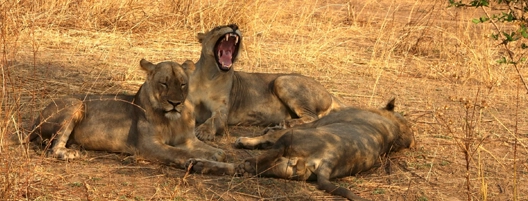
This account—and those that follow—is not merely a mosaic of impressions from a recent trip to Zambia, Namibia, Botswana, and Zimbabwe. It is also an opportunity to test one’s adaptability and self-control. The Meditations of Marcus Aurelius and the realization that «everything changes»—in the spirit of Heraclitus of Ephesus—offered lessons that, without adding weight or bulk to my luggage, helped me cope with a climate as fierce as a lioness that has just given birth.
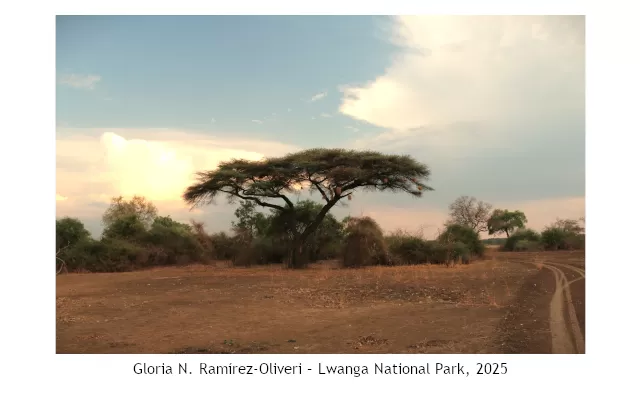
Africa is a land of sun, shade, and rain. One experiences this other «Land of Fire» on one’s own skin whenever the weather stifles, refreshes, or chills. It all depends on the month one visits the continent. In late October, setting foot on its soil means facing the most legendary, relentless, and absurd of its dictatorships: that of the sun. During the one-hour flight between Lusaka, the capital of Zambia, and Mfuwe—the gateway to South Luangwa National Park—one sees an immense plain of pale colors from above: those sandy hues produced only by earth beaten by the sun.
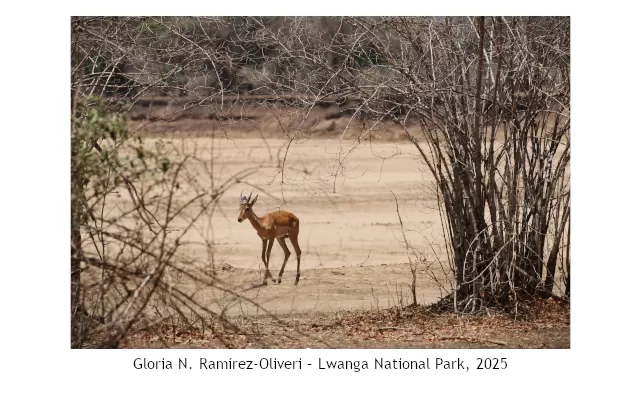
As the dry season progresses from May to October, an infinite range of ochres paints the landscape: yellow ochre, the most luminous; golden ochre, like the hue of the raw gold extracted from Africa’s mines; orange ochre—somewhere between yellow and terracotta—like the color of the bricks used to build the villages; and red ochre, like the dried blood of animals collapsing from thirst upon the sand. A pale ochre, like that of certain magical clouds that appear in the sky as November approaches, bringing a touch of coolness and heralding the rainy season.
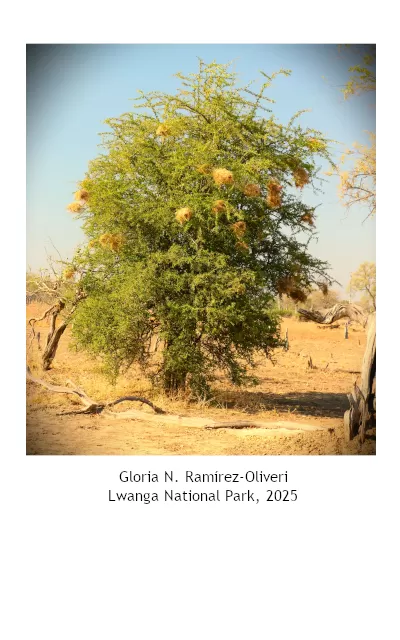
Witnessing such a process of drying out can weigh on those unaccustomed to the extreme fluctuations of the African climate. What is a lush, green earthly paradise during the rainy season transforms into a barren landscape—a tangled thicket of thorns—during the dry season.
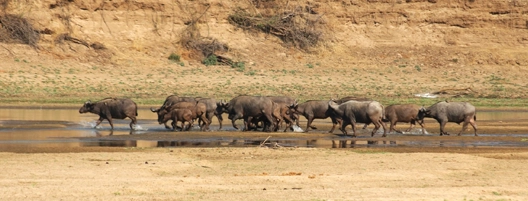
Ryszard Kapuściński, who knew the continent better than almost anyone, described it thus: «When the heat is intense, despite the abundance of sunlight, the landscape is reminiscent of scorched earth: ash-toned, seemingly dead, and utterly unwelcoming.»
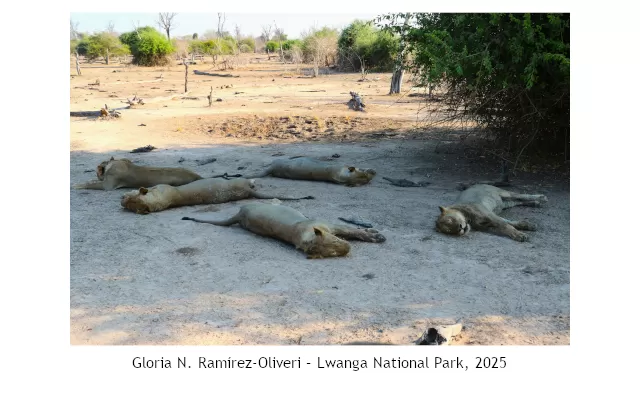
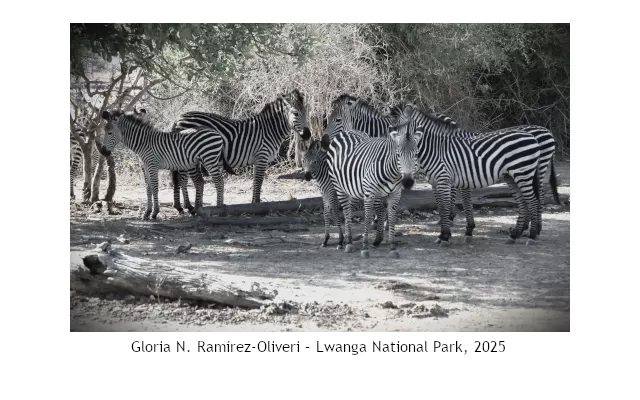
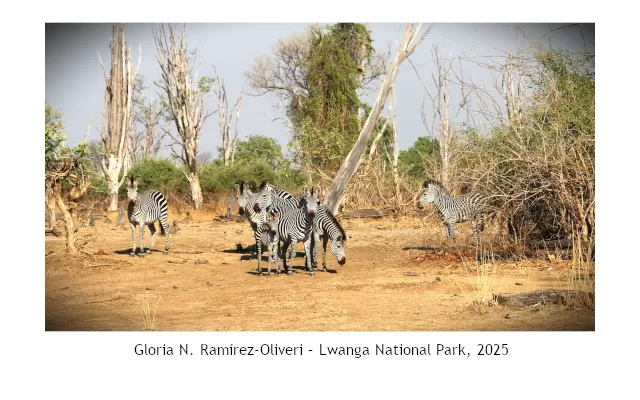
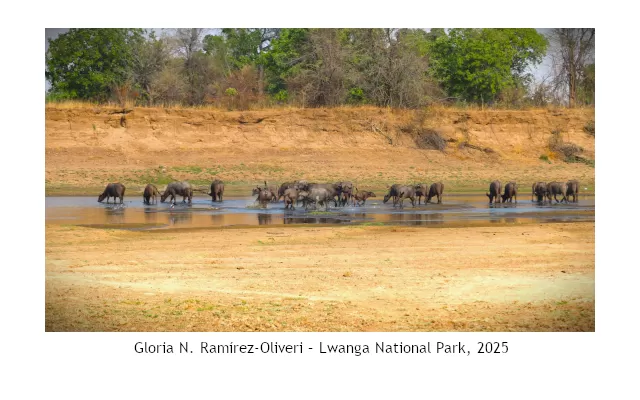
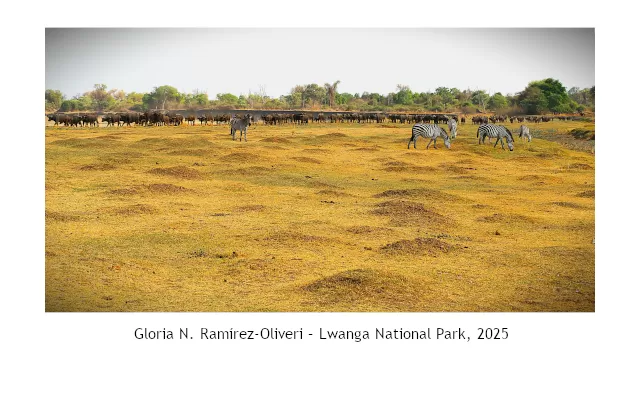
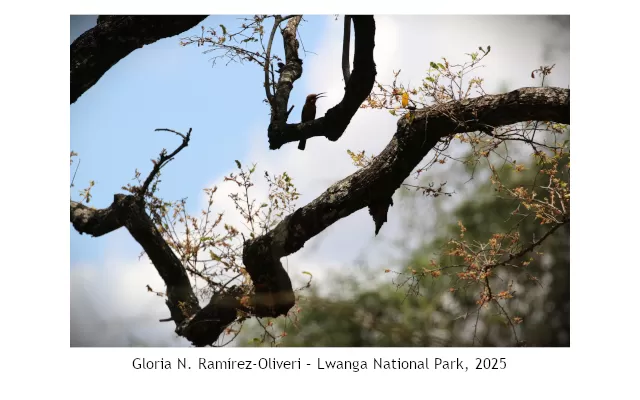
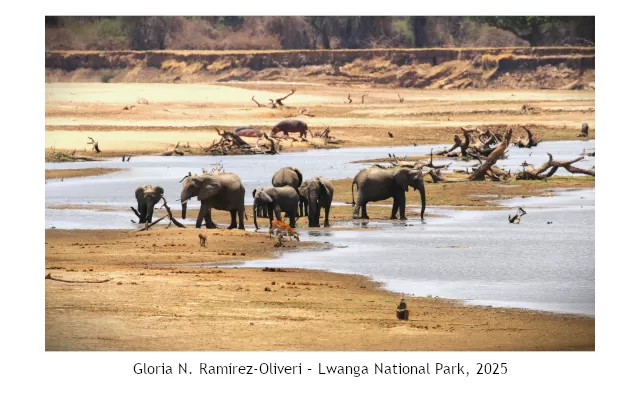
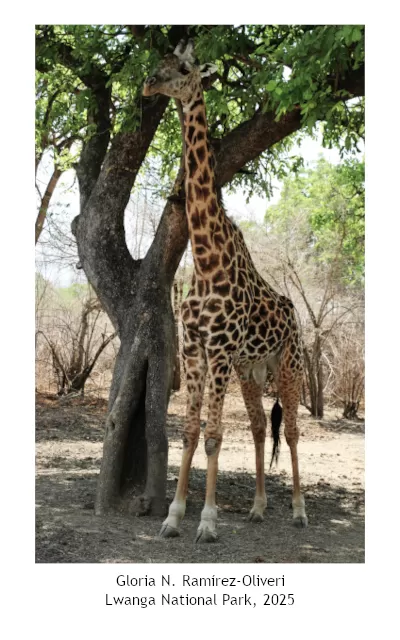
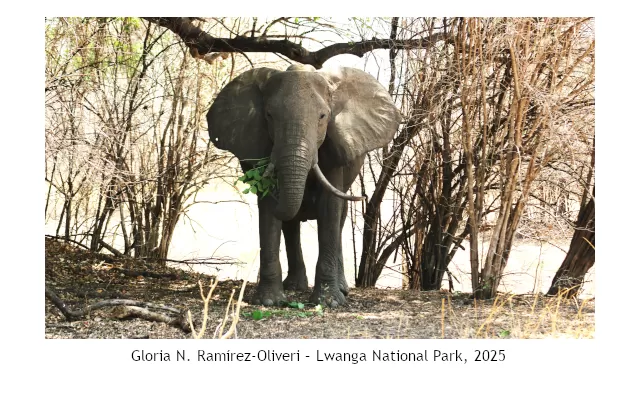
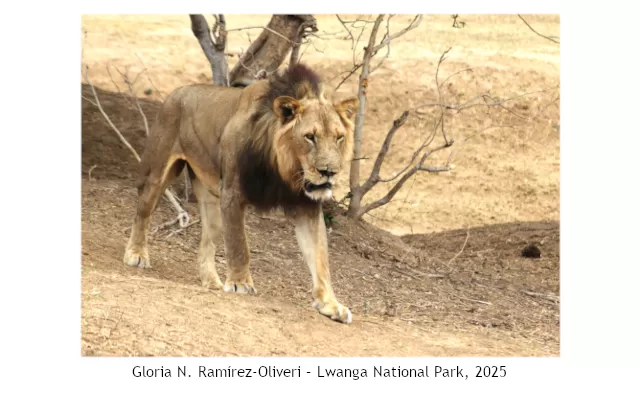
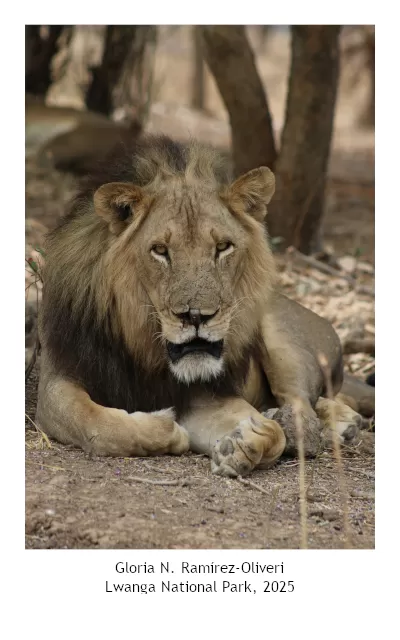
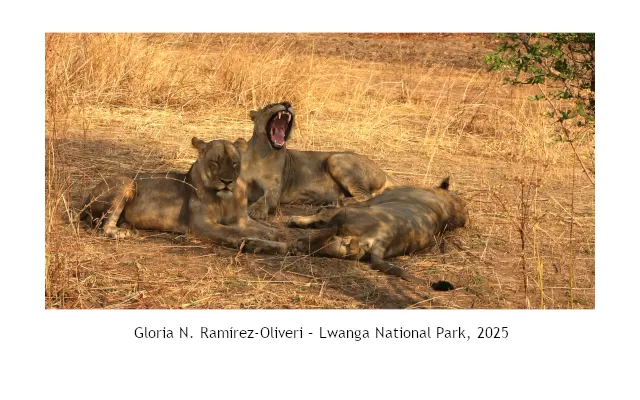
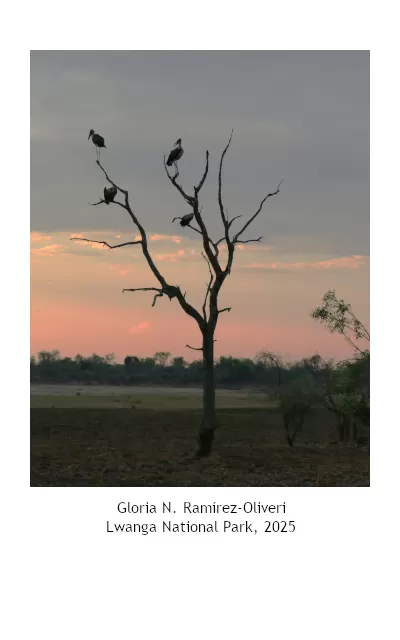
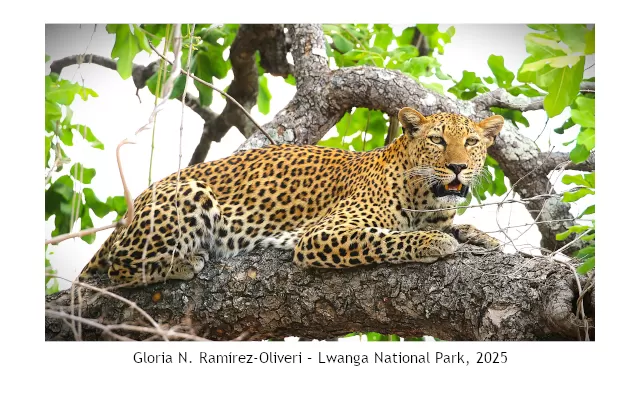
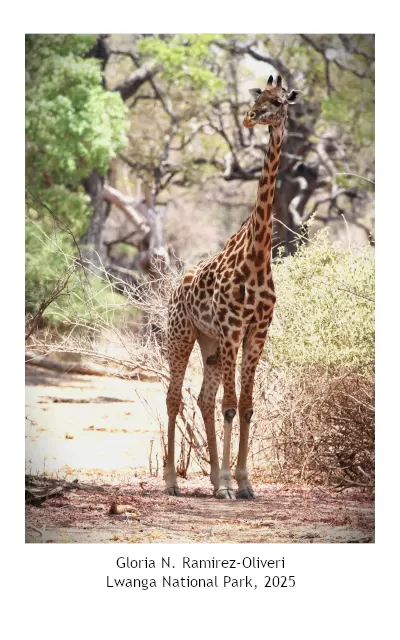
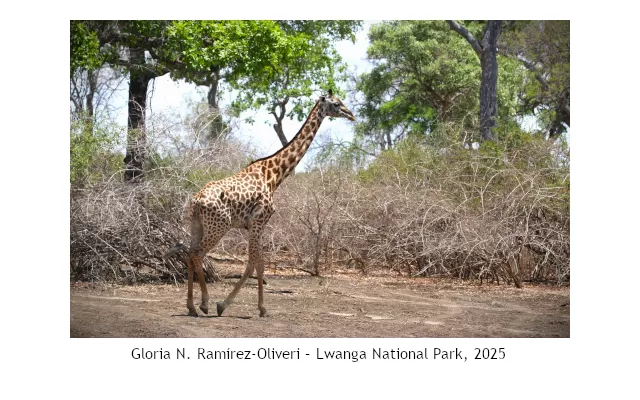
South Luangwa National Park, located in northeastern Zambia, was the first stop on the journey. In this vast natural sanctuary spanning 9,050 square kilometers, the Luangwa River acts as a judge, granting life and dealing out death. Four of the «Big Five»—elephants, lions, leopards, and Cape buffalo—inhabit the park’s immense plains. Also abundant are Thornicroft’s giraffes (found nowhere else on Earth), hippos, zebras, and over 400 bird species, including kingfishers, eagles, bee-eaters, cranes, yellow-billed storks, great white pelicans, and owls.
Yet, Africa also reserves the right to ignite the soul with delightful surprises. Strangely, even amidst extreme heat, one can experience phenomena that seem to defy the temperature. One need only picture a flowering jacaranda—or the orange-bloomed Delonix regia (flamboyant)—to see that certain species remain unfazed by the whims of the weather. Nothing diminishes their beauty.
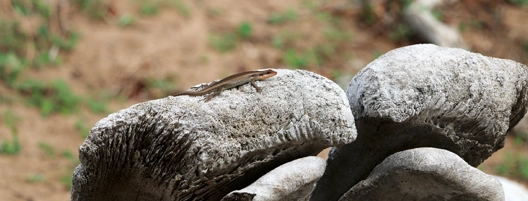
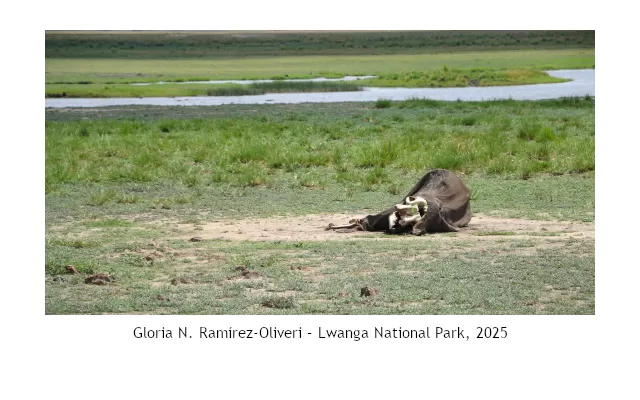
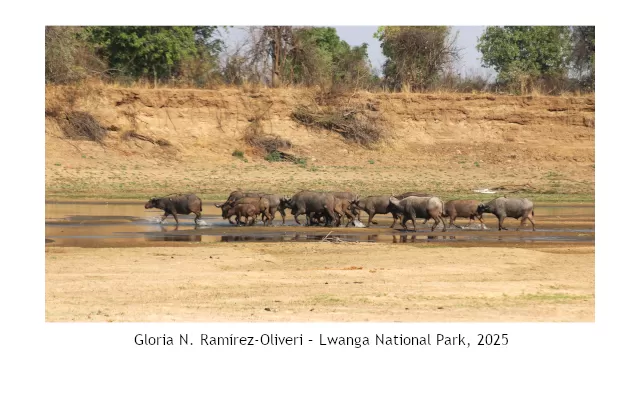
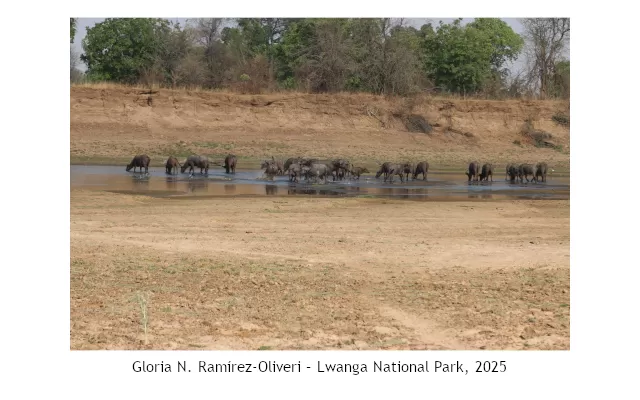
As November draws near—just days before the rainy season begins—the heat intensifies. The river—more akin to a stream—is a meeting point and a stage for the frenetic activity of wildlife. For buffalo herds, reaching it demands a tremendous effort. Some do not make it; lions, ever on the prowl, ensure they don’t. Occasionally, buffalo collapse from dehydration just meters away from the water’s edge.
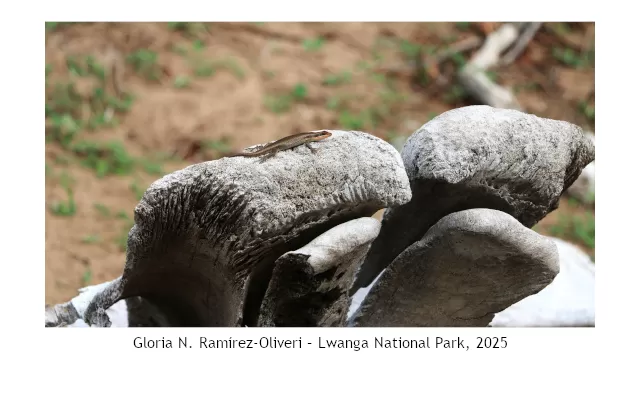
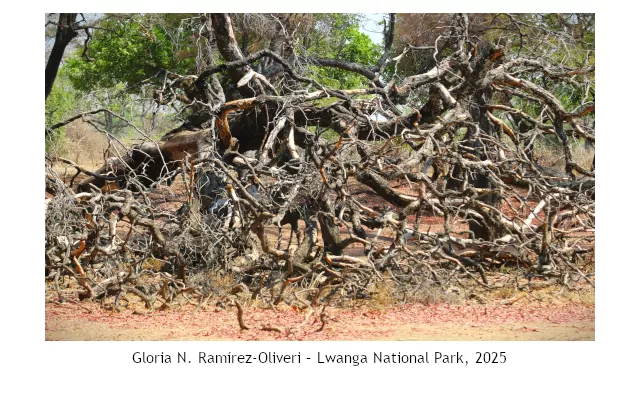
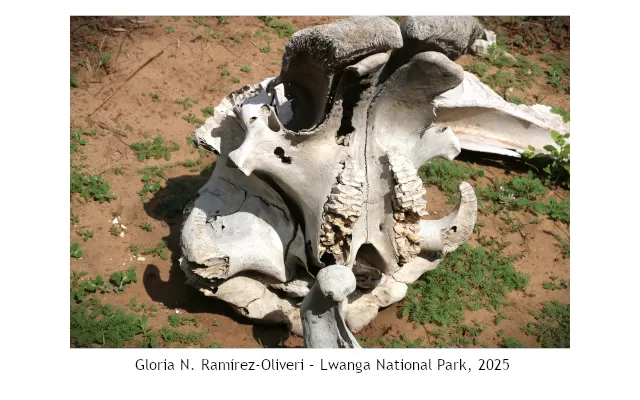
Littered with the carcasses of countless animal species, this national park is also an open-air graveyard. Within its borders, life and death unfold with equal naturalness. The law of the wild—of the arid bush in scorching Africa—is written in bones and the remains of trees.
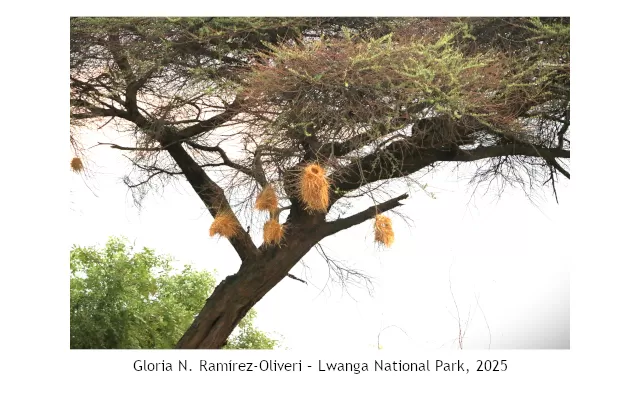
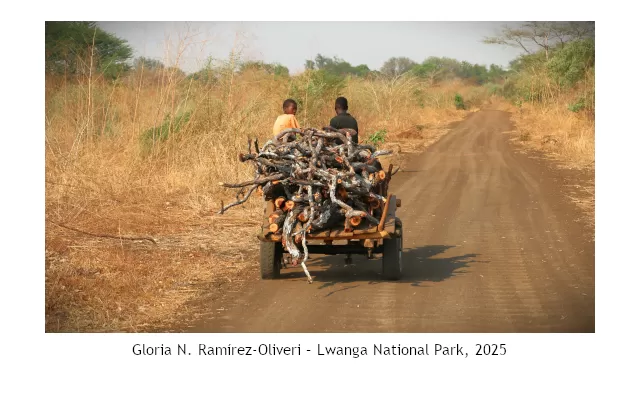
With determination and the passing of days, the visitor generally adapts to the climate. Other realities are absorbed along the way, for neither the landscape nor the temperature is ever the same from one day to the next. The path traveled on Monday is erased by Tuesday; every trail is a «path made by walking.» Only the trees remain unscathed. On a journey with no fixed start or finish, they serve as the only signposts. Meanwhile, the sun beats down. It heats and it rules. And when the sun rules, the other kingdoms obey.
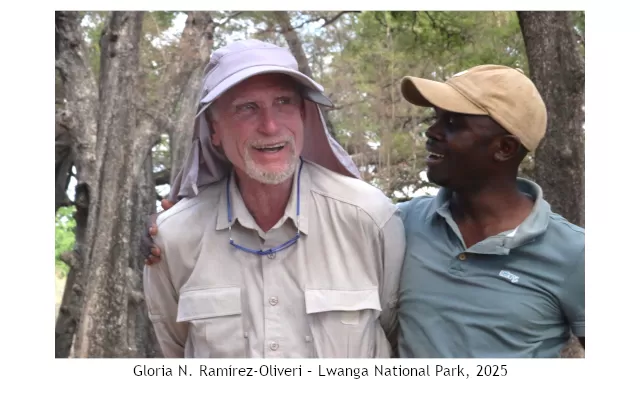
The arrival of the rains brings an end to the safaris. It becomes impossible to spot elephants, giraffes, lions, wild boars, buffalo, snakes, antelopes, or zebras. Gone, too, are the paths forged by walking, as well as the guides: Bill Gordon and «Tarzan» Andrew Mweetwa—whom I will write about in another story.
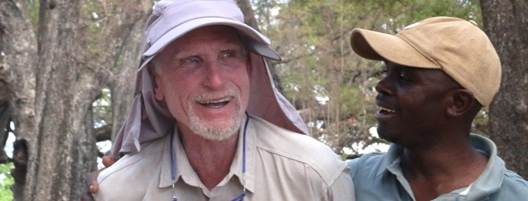
William Gordon y Andrew Mweetwa, 2025
*Gloria Nivia Ramírez Oliveri holds a degree in Social Communication and Journalism from the Pontificia Bolivariana University in Medellín (1991) and a Master’s degree in Liberal Arts (Spanish) from California State University, Northridge (CSUN). She began her career as a photojournalist for the newspaper *El Colombiano* (1989), documenting one of the most turbulent decades in Colombia’s recent history. Her photographs have been published in various media outlets in Colombia and abroad. Her professional background also includes teaching and research. Her undergraduate thesis (1991)—*Vigencia de la fotografía documental en la prensa escrita: Tras las huellas de Henri Cartier-Bresson en el contexto de Melitón Rodríguez* (The Relevance of Documentary Photography in the Print Media: Following in the Footsteps of Henri Cartier-Bresson within the Context of Melitón Rodríguez)—opened the door for her to intern at the prestigious Magnum Photos agency in Paris in 1993. She is a member of the Pacific Ancient and Modern Language Association (PAMLA) and has presented at academic conferences at various universities in the United States, where she resides. She collaborates with the research team for the Spanish-language Journalism program at CSUN. She serves as an assistant editor for this journal and works as a freelance reporter.
**Catalina D. Roldán holds a dual international degree in Journalism and French Language and Culture from California State University, Aix-Marseille Université, and the Université de Paris-Créteil. She also holds an MBA specializing in Social Entrepreneurship from the University of Southern California (USC), thereby combining her experience in strategic communication with linguistic and cultural expertise.